This schedule pulls together Alliance's own maintenance handout and the manuals for the parts on the 310RL: CURT 8,000 lb axles with TCS coil suspension, Lippert 6-point hydraulic leveling, Suburban water heater and furnace, three rooftop ACs, a PVC roof, and LiFePO4 batteries. If you only do one thing, do the Every Trip list. Most failures we hear about (loose lugs, dry seals, a dead breakaway battery) show up there first.
When your manual and this page disagree, follow the manual and the labels on your rig. Some 310RLs have options, such as MORryde IS disc brakes or a generator, that change a few items. Those are marked.
Keep a log. Write down the date and odometer reading each time you service bearings, brakes or tires. Mileage items are easy to lose track of between trips.
Want reminders? We're working on email reminders for time-based maintenance, set up for your rig and adjustable to how you use it. If you'd like to be on the list, contact us and we'll add you.
Every trip
These take about 20 minutes and catch most problems before they leave you on the shoulder.
Before you leave
| Task | What to do | Related guide |
|---|---|---|
| Tire pressure | Set every tire cold to the max pressure on the sidewall (H-rated 16"). Check the TPMS reads all six sensors. | TPMS options |
| Tires and wheels | Look for bulges, cuts, uneven wear and missing valve caps. Check that lug nuts are all present and none are rust-streaked. | |
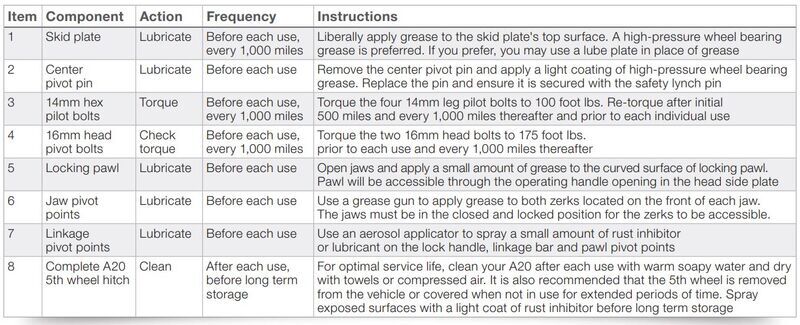
| Hitch and pin box | Check the CURT A20 jaws are locked and the safety pin is in. Look over the Helux pin box for cracks or bent parts. | CURT A20 hitch maintenance |
| 7-way plug | Look for green corrosion or bent pins. Clean with CRC QD Electronic Cleaner if needed. | Maintenance items |
| Lights | Walk around with a helper: running, brake, turn and marker lights. | |
| Brakes | After hooking up, roll forward slowly and apply the controller's manual lever. You should feel the trailer pull. | |
| Breakaway cable | Clip the cable to the truck, not the hitch, with enough slack for turns. | |
| Slides, awning, steps | Retract fully. Check slide toppers are clear of leaves and water before bringing slides in. Lock the StepAbove steps up. | |
| Jacks | Retract all six legs and confirm the panel shows them up. Look under the rig to be sure. | |
| Inside | Close roof vents, latch the fridge, secure the bedroom TV, close and latch cabinets and the pocket door. Turn the water pump off. | Bedroom TV; Pocket door |
| LP | Close the tanks if you don't run the fridge on propane while towing (the 310RL fridge is 12V, so you usually can). | |
| Weight | Know your loaded pin weight and total weight against the truck's ratings. | Can my truck tow it? |
On the road
- First 50 miles after any wheel was removed: re-torque lugs at 10, 25 and 50 miles (Lippert). See "By mileage" for values.
- At fuel stops: feel each hub with the back of your hand or use an infrared thermometer. One hub much hotter than the others points to a dragging brake or failing bearing. Check TPMS temperatures too.
When you arrive
- Plug in through an EMS or surge protector and check the outlet with your tester before connecting. Inspect the power cord for cuts or heat damage.
- Level, then extend slides. Watch the slide seals roll out flat; a folded seal lets water in.
- Check for anything that shifted or leaked in transit, especially under sinks and around the toilet.
Before you pack up
- Dump black first, then gray, and flush the black tank. See our tanks, smells and overflows guide.
- Clean and dry the awning before rolling it up, if it's wet. If you can't, open it again within two days to dry.
- Sweep and fold the steps; grit wears the hinges.
Monthly and every 3 months
Monthly (while in use or stored)
| Task | What to do | Related guide |
|---|---|---|
| Smoke and LP/CO alarms | Press test on each. The LP/CO detector is hardwired, so it's off when the battery disconnect is off. Vacuum dust from its vents. | |
| Fire extinguishers | Gauge needle in the green, pin and tamper seal in place, no dents. Turn dry-chemical units upside down and tap to loosen the powder. | |
| Furnace vent (heating season) | Look at the outside vent for soot, nests or blockage (Suburban). Keep inside return air clear. | |
| LP system | Smell for gas; brush soapy water on fittings if you suspect a leak. Never use a flame. | |
| Batteries | Check state of charge in the app or monitor. Lithium needs no water or terminal cleaning, but keep connections tight. | Winter lithium storage |
| Portable generator | Start it and run it under load to keep the fuel system clean. See Portable generator tips below. If you have the built-in generator option, Alliance says to run it 2 hours a month under load. | |
| AC filters (full-timers) | Wash all three return filters. Part-timers can do this quarterly. |
Every 3 months
| Task | What to do | Related guide |
|---|---|---|
| AC filters | Wash the return filters in warm soapy water; dry before reinstalling. | |
| Leveling jack tubes | Wipe the inner tubes clean and spray with silicone lubricant, jacks extended (Alliance). | |
| Drum brake adjustment | Not needed on the 310RL's self-adjusting brakes. If yours have been changed to manual-adjust drums, adjust them every 3 months (Alliance) or 3,000 miles (Lippert). | |
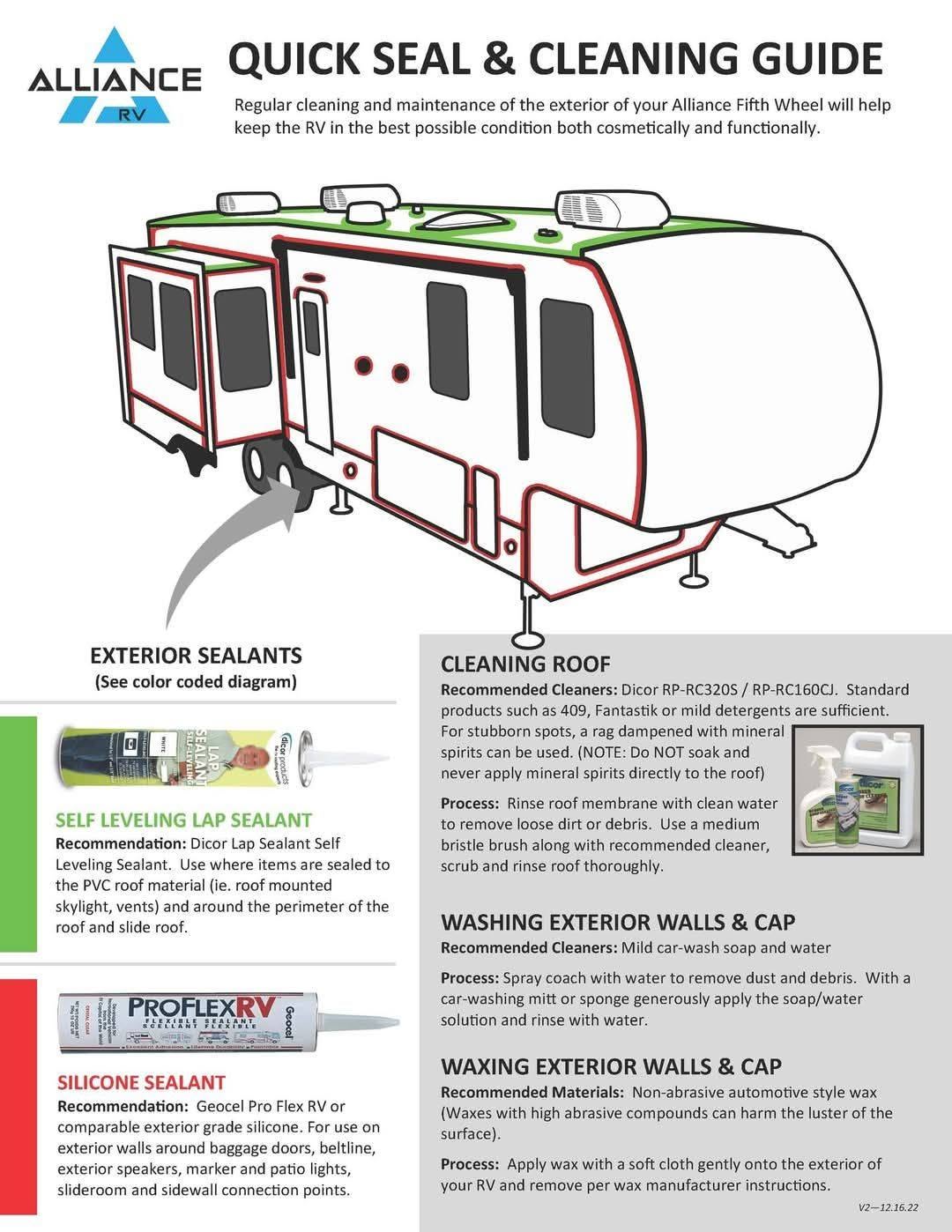
| Slide seals | Clean with a mild cleaner and treat with a rubber seal conditioner (Alliance names 409 or Lysol for cleaning). | Sealant guide |
| Steps | Rinse grit off the StepAbove hinges and wipe dry. | |
| Breakaway battery | Check it's charged (many boxes have a test button). It charges only while the 7-way is plugged into the truck. |
Every 6 months and seasonal
Every 6 months (spring and fall)
| Task | What to do | Related guide |
|---|---|---|
| Roof and sealant inspection | Walk or view the whole PVC roof: vents, AC shrouds, skylight, ladder mounts, edges. Alliance says at least twice a year. Clean with a mild cleaner, never petroleum-based products. | Sealant guide |
| Side and front sealant | Check window frames, marker lights, the front cap seam and corner trim for cracks or gaps. | Sealant guide |
| Sanitize fresh water | 1/4 cup bleach per 15 gallons of tank capacity. For the 98-gallon tank that's about 1-2/3 cups. Fill, run every faucet until you smell bleach, wait 12 hours, drain and flush. Also after storage. | Fresh tank full? |
| Water filters | Replace inline and fridge/ice maker filters, and clean the water pump inlet screen. | Ice maker water valves |
| Water heater outside | Check the vent and burner tube for wasp or mud-dauber nests and corrosion (Suburban). | |
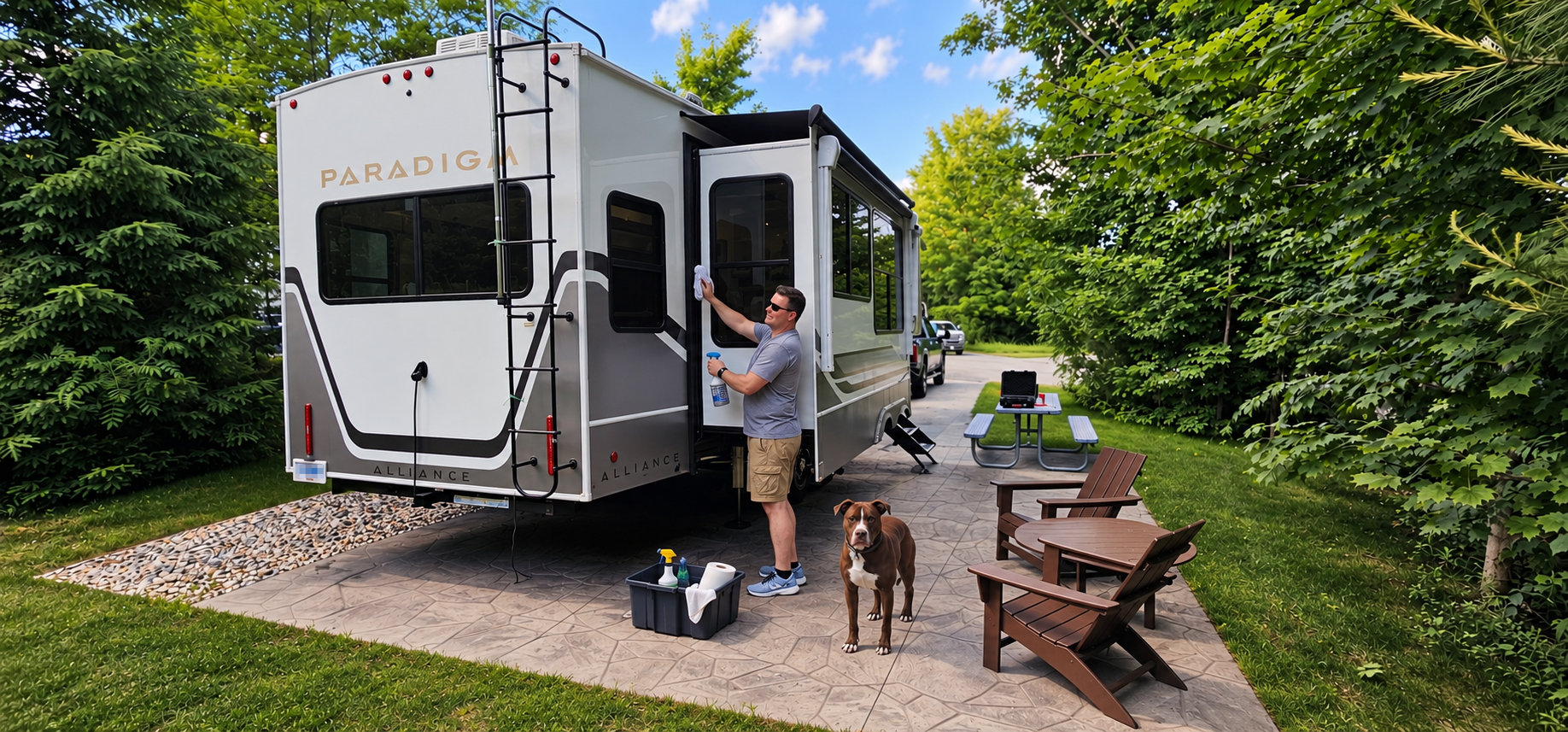
| Wax and wash | Wash and wax the fiberglass 2 to 3 times a year. If you pressure-wash, keep it under 1,200 PSI and away from seals (Alliance). | |
| Undercarriage | Rinse road salt off the frame and running gear. Touch up rust, then treat with Fluid Film (Alliance). | |
| Awning | Open fully, wash with 1/4 cup dish soap in 5 gallons of water, rinse, and dry before retracting. Look for mildew and torn stitching. | |
| Seals and gaskets | Wipe door, baggage door and window gaskets with 303 Aerospace Protectant and a clean microfiber cloth. | Maintenance items |
Winterize (fall)
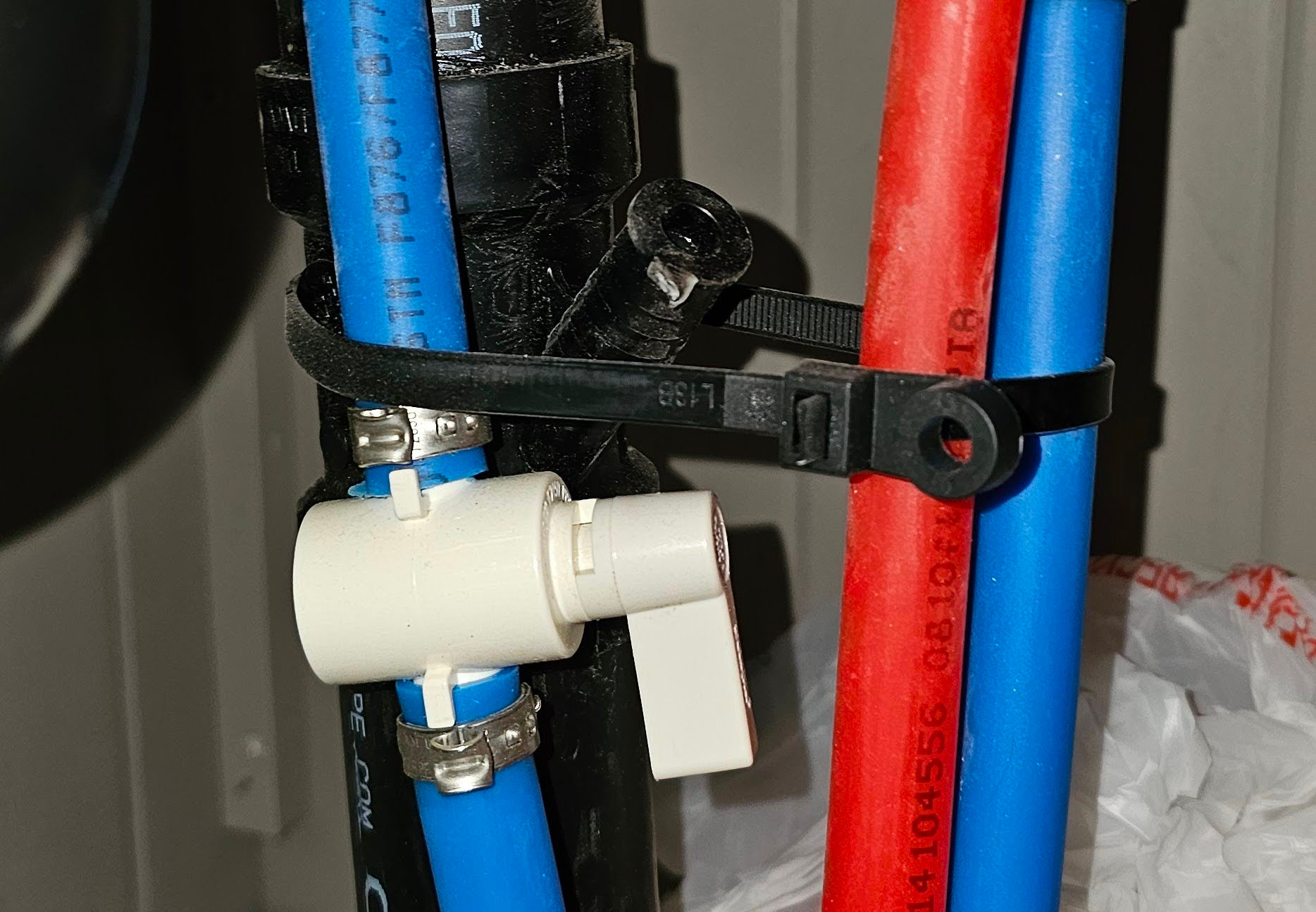
If you'll see freezing temperatures, winterize before the first hard freeze. Our full walkthrough covers it step by step.
- 2026 Alliance Paradigm 310RL Complete Winterization Guide
- How to Drain the Water System on a 2026 Paradigm 310RL
- Winter Storage for RV Lithium Batteries: charge only between 32°F and 131°F.
- Charge the breakaway battery before storage and again before the first trip.
- Cover tires from sun, and block them off bare ground if stored long-term.
- Put rodent deterrent in the basement and seal any gaps where lines enter the underbelly.
De-winterize (spring)
- Flush the antifreeze from all lines and the water heater bypass, then return the bypass valves to normal.
- Sanitize the fresh water system (see above).
- Check the water heater anode before filling the tank.
- Turn on LP, light each appliance, and check for leaks with soapy water.
- Test all alarms and replace the smoke alarm battery.
- Do the yearly items below while you're at it.
Every year
A good time is during de-winterizing in spring, before the first trip. Items with a mileage interval are due at whichever comes first.
| Task | What to do | Related guide |
|---|---|---|
| Wheel bearings | Clean, inspect and repack with NLGI #2 grease and new seals. Every 12 months or 12,000 miles (Dexter, Lippert service guidance). Lippert's axle manual lists a minimum inspection yearly or every 36,000 miles. | |
| Brakes | Clean and inspect magnets, shoes or pads, and drums or rotors. Replace shoes thinner than 1/16" (Lippert). If you have MORryde IS disc brakes, check fluid in the front cargo-area reservoir (Alliance). | |
| Breakaway system | Test with the truck connected by safety chain but the 7-way UNPLUGGED: pull the pin and try to move forward slowly. Brakes should lock. Put the pin back. Testing with the 7-way plugged in can damage the brake controller. | |
| TCS suspension | Inspect trailing arms, coil springs, shocks, bump stops and track bars. Grease the track bar fittings. Check torque (see "By mileage"). Also every 6,000 miles. | |
| Recall check | Look up your VIN at nhtsa.gov/recalls. Example: 2025-2026 Paradigms with CURT TCS had a shock bolt recall (NHTSA 26V337). | |
| Hydraulic leveling fluid | With all jacks and slides retracted, fluid should be 1/4" to 1/2" below the fill spout (Lippert). Look for leaks at cylinders and hoses. | |
| Water heater anode | Drain the tank, then pull the anode with a 1-1/16" socket. Replace when about 75% eaten away (Suburban). Wrap threads with TFE tape. Magnesium is #232767; aluminum #232768 for hard water. Flush sediment while it's out. | |
| Furnace | Inspect the burner and exhaust; clean as needed. Check door gaskets and leak-check gas connections (Suburban, Alliance). | |
| AC units | Clean the condenser and evaporator coils. Check the roof mounting bolts are snug (Alliance). | |
| LP tanks and lines | Look for rust, damaged hoses and regulator vent blockage. Check the date stamped on each cylinder collar (see Multi-year replacements). | |
| Smoke alarm | Replace the battery. | |
| Pin box | Inspect the Helux pin box for cracks, check bolt torque, and clear nests (Alliance). The coil spring itself is maintenance-free. | CURT A20 hitch maintenance |
| Hitch | Follow the CURT A20 schedule for lubing the jaws and checking hardware. | CURT A20 hitch maintenance |
| Slide mechanisms | Inspect and clean slide rails and the bedroom BAL Exact-Slide cables. Don't grease cables unless the manual says to. | |
| Steps | Check hinge pins and fasteners on the StepAbove. | |
| Tire age | Read the DOT date code on each tire. Plan replacement at 5 to 6 years regardless of tread (Alliance). | |
| TPMS | Check sensor battery levels in the monitor; replace low ones. | TPMS options |
By mileage
Track these from your odometer log. When a time interval is also listed, do it at whichever comes first.
| Miles | Task | Source |
|---|---|---|
| 10, 25, 50 after any wheel is removed (including new) | Re-torque lug nuts in a star pattern, in stages. | Lippert |
| 200 (new rig) | Burnish new brakes or ones that sat in storage. Manually adjust drum brakes only if they aren't self-adjusting. | Lippert, Alliance |
| 3,000 | Inspect brakes, hubs and bearings for heat or play. Adjust drums only if they aren't self-adjusting. | Lippert, CURT TCS-HD |
| 6,000 | Inspect TCS trailing arms, track bars, shocks and U-bolts; check torque. | CURT TCS-HD, Alliance |
| 12,000 (or yearly) | Repack wheel bearings with new seals. | Dexter, Lippert service, Alliance |
| 36,000 (or yearly) | Full brake cleaning and inspection, magnet check, and suspension inspection. | Lippert axle manual, CURT TCS-HD |
| 50,000 (or 5 years) | Replace TCS shocks. | CURT TCS-HD |
Torque reference
Check the tag on your axle and your owner's manual first. The values below come from the manuals listed. Alliance and Lippert give different lug torque, so if they disagree, go with your axle tag.
| Fastener | Torque | Source |
|---|---|---|
| Wheel lug nuts | 120 ft-lb | Alliance handout (Lippert gives staged values by wheel; confirm on the axle tag) |
| TCS trailing arm bolt | 175 ft-lb (silver) / 200 ft-lb (yellow) | CURT TCS-HD |
| TCS U-bolts | 110 ft-lb | CURT TCS-HD |
| TCS track bar | 80 ft-lb | CURT TCS-HD |
| TCS spring retainer | 30 ft-lb | CURT TCS-HD |
| TCS shock | 20 to 30 ft-lb | CURT TCS-HD |
| TCS bump stop | 20 ft-lb | CURT TCS-HD |
| Spindle nut (bearing preload) | About 50 ft-lb to seat, back off, then finger-tight | Dexter, Lippert service |
Multi-year replacements
| Every | Item | Notes |
|---|---|---|
| 2 to 3 years | Breakaway battery | Small sealed lead-acid batteries weaken quickly. Replace sooner if it won't hold the brakes. |
| 5 years | Hydraulic leveling fluid | Change at least every 5 years (Lippert, Alliance). |
| 5 years or 50,000 miles | TCS shocks | CURT TCS-HD. |
| 5 to 6 years | Tires | By the DOT date code, regardless of tread (Alliance). |
| About 5 years | LP/CO detector | Check the expiration date on the unit; most last 5 years, some 7. Many chirp at end of life. |
| 6 years | Dry-chemical fire extinguishers | Typical recharge or replace interval; check the label. Disposable units: replace at 12 years or when the gauge drops. |
| 10 years | Smoke alarm | Replace the whole unit (manufacturer guidance is 8 to 10 years). |
| 12 years, then every 5 | LP cylinders | DOT cylinders must be requalified 12 years after the stamped date, then every 5 years with a visual inspection. Many owners replace them instead. |
| As needed | Water heater anode | Usually 1 to 3 years, depending on water hardness and use. |
| As needed | Roof sealant | Reseal sections that fail inspection rather than recoating the whole roof. |
Portable generator tips
Most 310RLs don't have the built-in generator, so many owners carry a portable inverter generator. These are general tips; check your generator's manual for the intervals and oil type for your model.
- Before each use: check the oil level and fuel, and look at the air filter.
- Placement: run it outside, at least 20 feet from the rig, with the exhaust pointed away from doors, windows and vents. Treat the LP/CO alarm as a backup, not a plan.
- Connecting: plug the rig in through your EMS or surge protector. Turn off the ACs and the electric water heater first, then add loads one at a time. A 4,000-watt class generator runs one AC with small loads, not all three.
- Oil: change it after the break-in period, then at the interval in your manual.
- Exercise it: start it and run it under load regularly during storage months so the carburetor doesn't gum up.
- Storage: add fuel stabilizer, or run the carburetor dry, before storing it for more than a month.
- Spark arrestor: keep it clean. Many campgrounds and public lands require one.