Overview
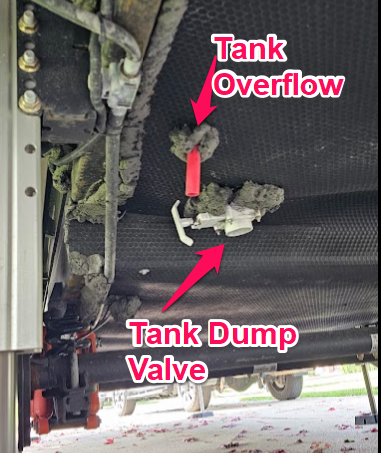
When filling the fresh water tank on your Alliance Paradigm 310RL, you might wonder how to tell when the tank is completely full. While the RV's tank level monitoring system provides an estimate, there's a more reliable physical indicator: water flowing from the fresh water tank's overflow pipe.
Understanding how this overflow works is especially important if you frequently camp without hookups (boondocking) and want to maximize your available fresh water.
How the Fresh Water Tank Overflow Works
The fresh water tank uses an overflow pipe that serves two important purposes:
- Overflow indicator: As the tank fills and reaches capacity, excess water begins flowing out of the overflow pipe underneath the RV. This is your indication that the tank is full.
- Air vent: As you use fresh water from the tank, the overflow/vent plumbing allows air to enter and replace the water being pumped out, preventing a vacuum from forming inside the tank.
Some RVs have separate vent and overflow lines. On the Paradigm 310RL, the overflow pipe also serves as the tank's air vent.
How to Know When the Tank Is Full
- Connect your fresh water hose to the RV's fresh water inlet.
- Set the water management valves to the fresh tank filling position, following the RV's instructions.
- Begin filling the tank, preferably at a moderate flow rate.
- Monitor the fresh water tank level indicator as the tank fills.
- Watch underneath the RV for water beginning to flow steadily from the fresh water tank overflow pipe.
- Once water begins flowing from the overflow, stop filling the tank.
Water flowing from the overflow is generally a more dependable indication of a full tank than relying solely on the electronic tank level indicator.
Why Water May Continue Draining After Filling
One behavior some Paradigm owners have noticed is that water continues flowing from the overflow pipe even after the fresh water supply has been turned off.
This can occur because of a siphoning effect.
When water fills the overflow line, it can establish a siphon that continues pulling water from the tank until air enters the line and breaks the siphon.
Depending on the plumbing configuration, this can result in losing more fresh water than expected.
For campers who depend on their onboard fresh water supply, this can be particularly frustrating.
Options for Preventing Water Loss
Option 1: Use an Inline Water Meter
An inline water meter attaches between your fresh water hose and the RV's water inlet. It measures how many gallons pass through the hose.
This is particularly useful when filling an empty tank because you can track approximately how much water has been added without relying entirely on the tank sensors.
Keep in mind that a meter measures water entering the RV, not necessarily how much remains in the tank.
Water lost through the overflow won't be reflected in the meter's reading.
Option 2: Address Overflow Siphoning
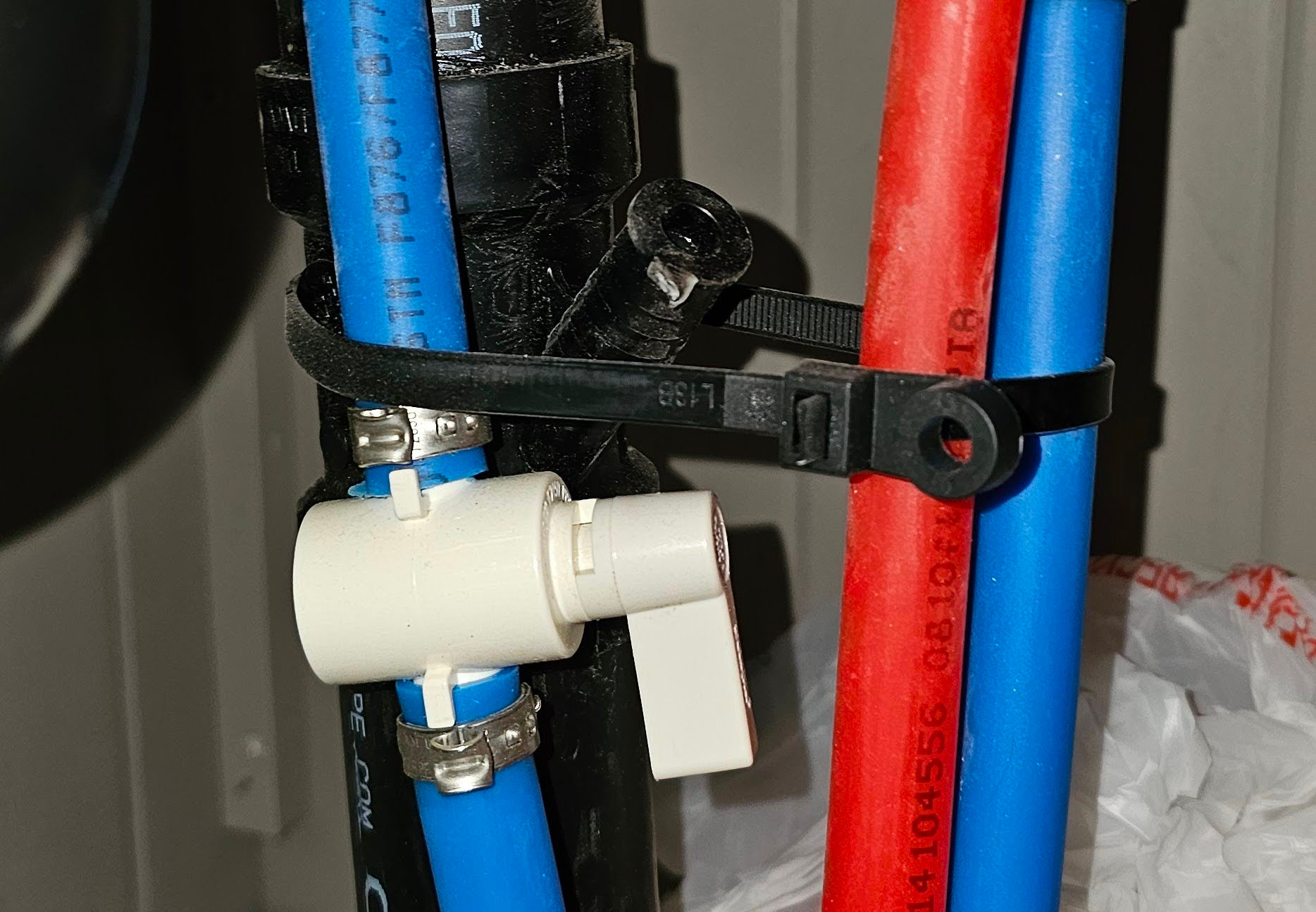
Some RV owners install a manual shutoff valve at the end of the overflow pipe to temporarily interrupt siphoning.
However, this approach requires significant caution because the overflow may also be the tank's primary air vent.
Never leave the overflow/vent line closed while using water from the tank or while filling it. Doing so can create pressure or vacuum conditions that may damage the tank or plumbing.
A shutoff valve should not be considered a permanent solution without verifying the tank's venting arrangement and consulting the manufacturer or a qualified RV technician. A properly designed anti-siphon solution that preserves unrestricted venting is preferable.
Helpful Tips
- Don't rely exclusively on the electronic tank level gauge, which may not indicate the exact moment the tank reaches capacity.
- Use moderate water pressure and flow when filling to reduce the chance of overfilling.
- Stop filling promptly when water begins flowing from the overflow.
- If water continues draining long after filling, investigate whether siphoning is occurring.
- Consider using an inline water meter to track water consumption and tank filling, especially when boondocking.
- Never block or permanently cap the fresh water tank's vent or overflow line.