Here in Michigan, winter temperatures can regularly drop below -10°F. While high-quality LiFePO4 batteries can survive storage down to a chilly -10°F (-23°C), our weather patterns routinely push right past those limits. Even if a deep freeze doesn't permanently kill the cells, it presents a massive obstacle come spring: you cannot safely charge a lithium battery if its internal cell temperature is below 32°F (0°C).
If you want to protect your investment, maximize your battery lifespan, and ensure your rig is ready to roll the minute camping season kicks off, it’s time to bring those batteries inside.
Here is the exact step-by-step game plan to winterize your lithium battery bank.
The Big Question: Should You Discharge Before Storage?
There is a lot of old tech advice floating around about "deep cycling" or completely draining batteries before putting them away for the season. Do not fully discharge your lithium batteries.
Unlike older lead-acid batteries that like to stay at 100% float charge, or nickel-cadmium batteries that historically suffered from "memory effect," lithium iron phosphate cells have unique chemical sweet spots.
- The 30% to 50% Rule: For seasonal storage, aim to keep your batteries at a 30% to 50% state of charge (SOC)—roughly 12.8V to 13.2V.
- The Danger of 0%: If you store a lithium battery completely empty, its natural self-discharge rate will eventually drag the cell voltage below the critical low-voltage cutoff threshold. Once a cell drops too low, the internal Battery Management System (BMS) may lock out entirely, permanently ruining the pack.
- The Stress of 100%: Storing a battery at 100% full capacity for months on end places constant, elevated chemical stress on the internal components. This accelerates long-term capacity degradation, meaning your batteries will hold less total power over time.
Step-by-Step Lithium Extraction & Storage Guide
Step 1: Hit the Sweet Spot
Before unhooking anything, check your battery monitor or SmartShunt. If you are sitting at a full charge, run a few DC loads (like your lights, fans, or leveling jacks) to draw the pack down into that 40% SOC window. If they are low, give them a quick top-off via your converter or solar setup until they reach roughly 13.0V.
Step 2: Kill the Current
Turn off your inverter, shut down your solar charge controllers, and flip your rig’s main battery disconnect switch. You want to ensure there is zero current moving through the wires when you break the connections.
Step 3: Disconnect Safely
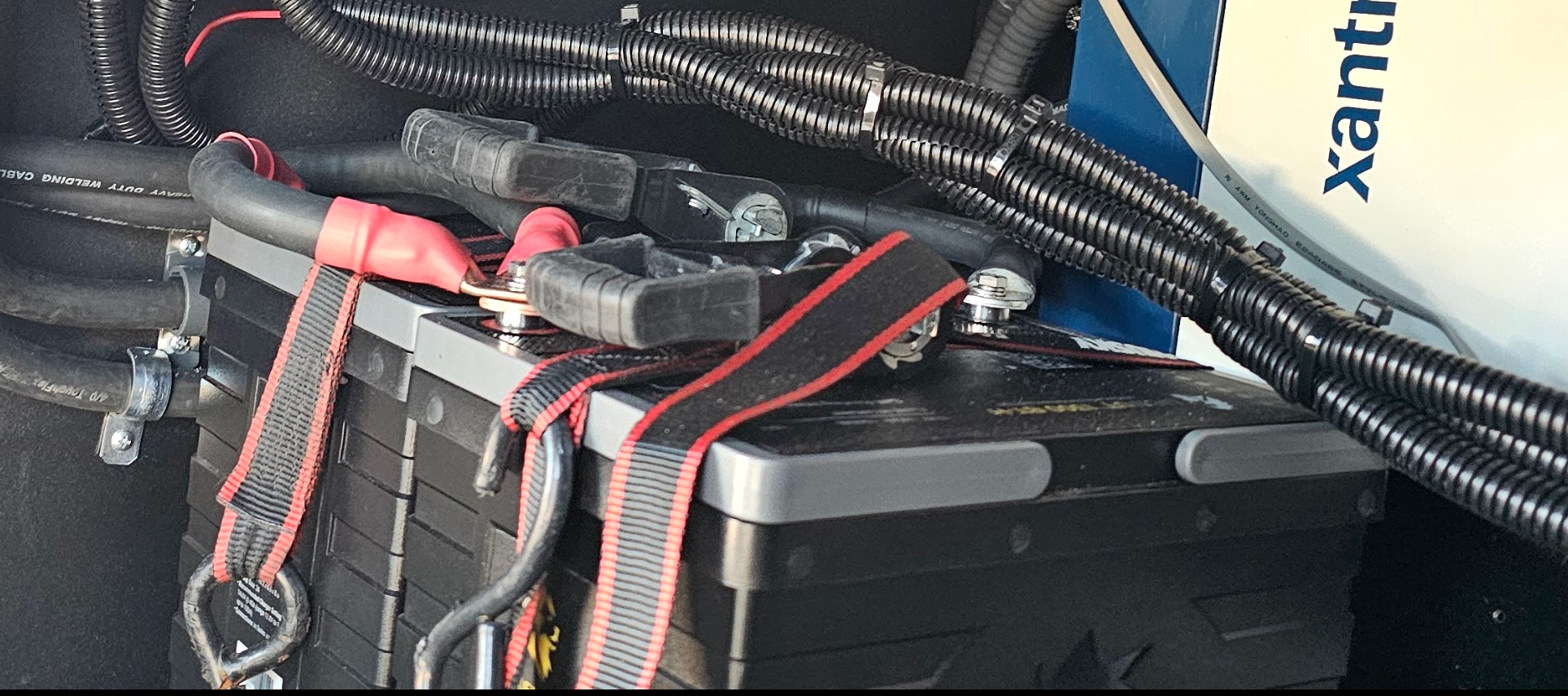
Grab your tools and always disconnect the Negative (-) cables first. Once the negative side is isolated and tucked safely out of the way, unbolt the Positive (+) cables. Removing the negative side first prevents accidental short circuits if your wrench touches the metal frame of your rig while loosening the positive terminal.
Step 4: Head for the Basement
Carry the batteries inside and store them in a climate-controlled environment, like a dry, ventilated basement. The ideal storage range is between 14°F and 95°F, making a standard home basement the ultimate safe haven from freezing temperatures and high humidity.
Step 5: Protect the Rig's Loose Wires
Back out in the camper's battery bay, don't leave those loose cable ends exposed. Wrap the positive terminal rings tightly with electrical tape or slip rubber caps over them. Label your wires clearly with zip ties or tape so you know exactly how to rewire your series or parallel configurations when spring arrives.
Step 6: Set a Half-Time Reminder
LiFePO4 batteries have an exceptionally low self-discharge rate, but they do still lose a tiny fraction of power over time. Set a calendar alert for 3 to 6 months into the winter. Pop down to the basement with a multimeter and check the voltage. If they’ve drifted down near 12.8V, use a standalone lithium-compatible charger to give them a brief maintenance top-off back into the storage zone.
The Payoff
Taking twenty minutes to pull your battery bank out of the camper doesn't just save them from Michigan's brutal frost—it protects them from the silent camper killers: parasitic draws. Even with a factory disconnect switch turned off, small components like stereo clocks, propane detectors, and leveling sensors can slowly bleed a battery bank dry over a long winter.
Keep them warm, keep them isolated, and keep them around 40% charge. Your rig—and your wallet—will thank you next spring!