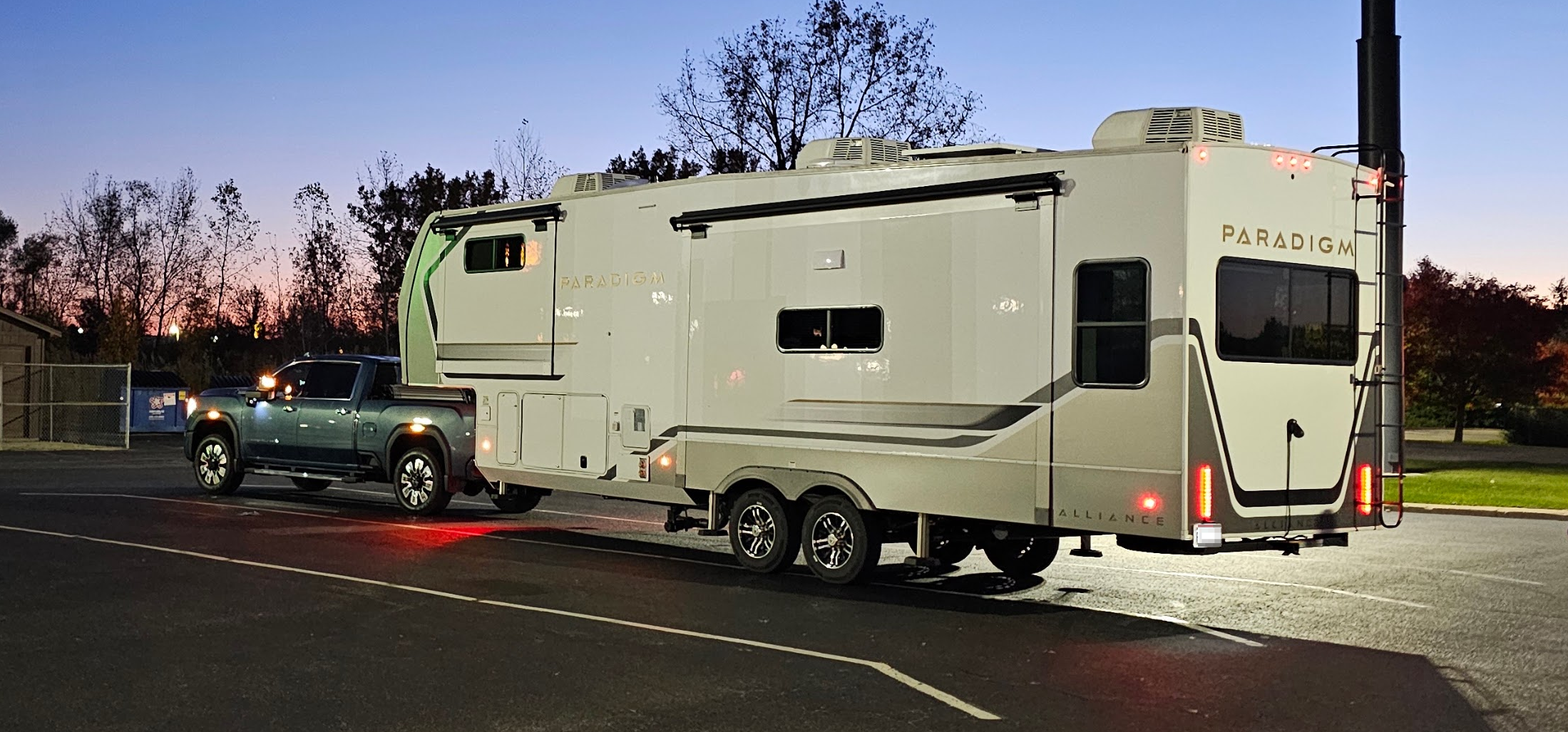
Overview
“Can my truck tow a 310RL?” is the most-asked question in every Alliance owner group. The short answer: tow rating is rarely the problem. Payload and rear axle capacity are, because real loaded pin weight on a 310RL runs well above the brochure number.
Brochure numbers vs. real pin weight
Dealer spec sheets for 2025–2027 units list a hitch weight of 2,530–2,674 lbs, dry weight of 12,243–13,525 lbs (some heavily optioned units list more) and GVWR of 15,000–16,000 lbs, depending on year and options. Hitch weight is measured empty, before you add a generator, washer/dryer, upgraded pin box, batteries, propane and the gear most owners store in the front basement. Owners estimate a generator or a washer/dryer each adds roughly 300 lbs, much of it on the pin.
On the Alliance RV owners forum, 310RL owners who weighed their loaded rigs report pin weights from about 3,050 to 3,750 lbs, with most landing between 3,100 and 3,350. One owner’s CAT scale numbers put the pin at just over 22% of the trailer’s loaded weight, in the middle of the usual 20–25% rule of thumb.
Quick estimate before you buy: plan on 20–25% of the trailer’s GVWR on the pin. That’s about 3,000–3,750 lbs for a 15,000 lb GVWR unit and 3,200–4,000 lbs for a 16,000 lb unit. Then add the weight of the hitch in your bed.
What limits your truck
- Payload (door-jamb sticker): pin weight plus passengers, hitch and cargo in the truck must fit under it.
- Rear axle rating (RAWR): most of the pin weight lands on the rear axle.
- Rear tire load rating: check the tire sidewall, not just the axle.
- GCWR: truck plus trailer combined.
Owners towing with 3/4-ton trucks have reported being over payload once they reached a scale. Single-rear-wheel 1-tons work for some owners and land close to the rear axle limit for others; a dually adds margin and stability.
How to weigh at a CAT scale
- Load the trailer and truck the way you travel: water, propane, gear, passengers.
- Pull onto the scale hitched, with truck steer axle, truck drive axle and trailer axles each on their own platform. Get the ticket.
- Unhitch nearby, then weigh the truck alone with the same people and cargo.
- Pin weight = (truck steer + drive hitched) − (truck steer + drive alone).
- Compare the hitched drive-axle number to your RAWR, and the pin weight plus truck cargo to your payload.
Ways to reduce pin weight
- Most 310RL storage is forward of the axles; move heavy items behind the axles where possible.
- Pay attention to how full the fresh tank is when you travel and where it sits on your unit.
- A rear cargo carrier shifts some weight back, but Alliance’s brochure rates the 2" rear accessory hitch at 300 lbs, and that includes the carrier itself.
Hitch notes
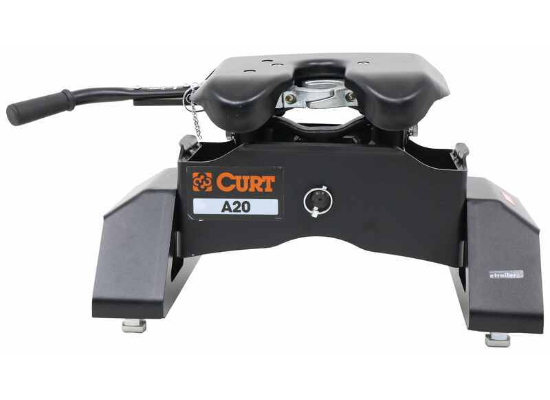
Short-bed trucks need a sliding hitch or a pin box designed for short beds. Recent 310RLs come with a CURT Helux coil spring pin box; owners also run gooseneck adapters and aftermarket pin boxes such as the Gen Y.
Related guides
Weights are dealer-listed or owner-reported. Always weigh your own rig and follow your truck manufacturer’s ratings.